
Paris Fashion Week: Onérique backstage
During the Spring-Summer 2027 Paris Fashion Week, Onérique was backstage.
We were invited to prepare the models' skin before makeup for three shows: Rubin Singer, Tala Barbotin Khalidy, and Ren Chunmei. Three universes worlds apart, yet sharing the same high standards.
We went there to work. We left with a very different idea of what this industry is really about.
Three designers, three universes
Rubin Singer, at the Palais de Tokyo
New York-based couturier Rubin Singer is known for creating the leather bodysuit worn by Beyoncé at the Super Bowl, a moment he describes as the most important of his career. He has also dressed Jennifer Lopez, Ariana Grande, and Alicia Keys.
His philosophy can be summed up in one sentence: clothing is social armor. His creations aren't there to decorate a woman, but to make her stronger. An idea that resonates with our own approach to skincare.
Tala Barbotin Khalidy, in Le Sentier
Franco-Lebanese designer Tala Barbotin Khalidy presented her collection in Le Sentier, the historic Parisian fashion district. Tala works with Lebanese and Syrian artisans to revive endangered embroidery techniques, such as Damascus Aghabani embroidery or metal thread work. Her approach goes beyond clothing. Trained in meditation, she teaches embroidery as a therapeutic tool for people who have experienced trauma. Her collection this season, The Moths, continues this work between heritage, craftsmanship, and transmission.

Ren Chunmei, at the Galerie Bourbon
The Chinese designer presented "A Dream Crossing the Tang" at the Galerie Bourbon: 41 looks entirely handmade, inspired by the Tang Dynasty, one of the most brilliant ages of Chinese civilization. This is not a historical reconstruction, but a reinterpretation: bringing over a thousand years of history into dialogue with contemporary creation.

What is a fashion show backstage really like?
Forget the glamorous images. A backstage area is a space that is too small, too hot, where dozens of people work simultaneously in a confined area. Hairstylists, makeup artists, dressers, assistants, photographers, show callers. Everyone has their task, their station, their precise minute.
The pace is almost military. Models arrive one after the other, sit down, and move from one station to the next. A few minutes per face, not a second more. Any delay impacts the entire chain.
What is striking is the number of people mobilized. Behind every silhouette that walks the runway for forty seconds, there are weeks of work and dozens of professions: couturiers, embroiderers, pattern makers, lighting technicians, production teams. A dense, structured industry that is much more demanding than it looks.

The transformation: what no one sees
This is perhaps what left the greatest impression on us.
Backstage, the models are young, smiling, and relaxed. They joke between rounds, they talk, they live. Then comes the moment to step onto the runway, and something changes. The features tighten. The gaze becomes fixed. The walk transforms. It is no longer quite the same person moving under the spotlights. Because on the runway, the protagonist is not the face: it is the clothing.
The same phenomenon occurs in front of photographers backstage. They are asked to pose, and they perform a series of precise, repeated movements designed to highlight the piece from every angle. Nothing is left to chance. It is a profession, and it must be learned.
Why is skin preparation so important before a fashion show?
Because under the spotlights, makeup is unforgiving. Runway lighting is intense and frontal. It reveals everything: dry patches, redness, uneven texture. If the skin is poorly prepared, foundation will mark, pull, and crack after just a few minutes. Well-prepared skin allows it to sit perfectly, evenly, and last throughout the entire show.
Preparation is not an aesthetic extra. It is the technical foundation upon which all the makeup artist’s work rests.
What ritual did we use backstage?
You might be expecting a protocol reserved for professionals or a product unavailable in stores. That is not the case.
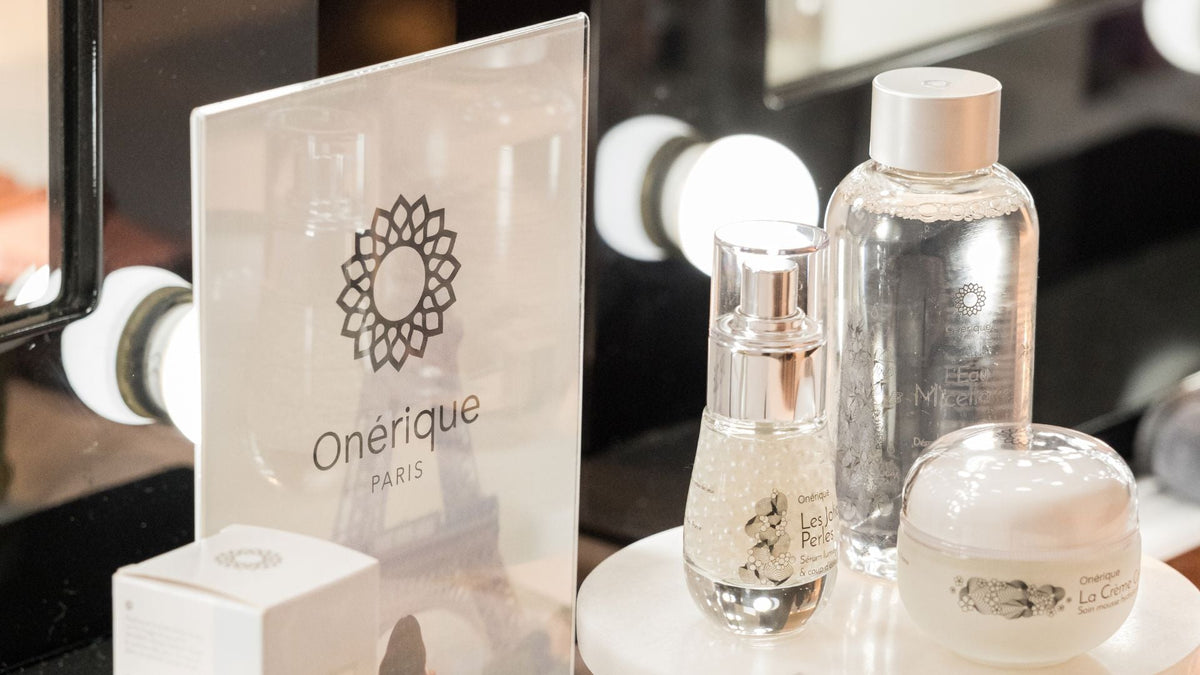
We used The Day Ritual, the one you can do at home tomorrow morning. Three steps, in this order:
1. Micellar Water to cleanse. Its marine water base removes impurities without stripping the skin, leaving it clean and toned, ready for the next steps.
2. Les Jolies Perles to brighten and protect. Its alginates create a protective film with a second-skin effect, and its light-reflecting action prepares an even complexion.
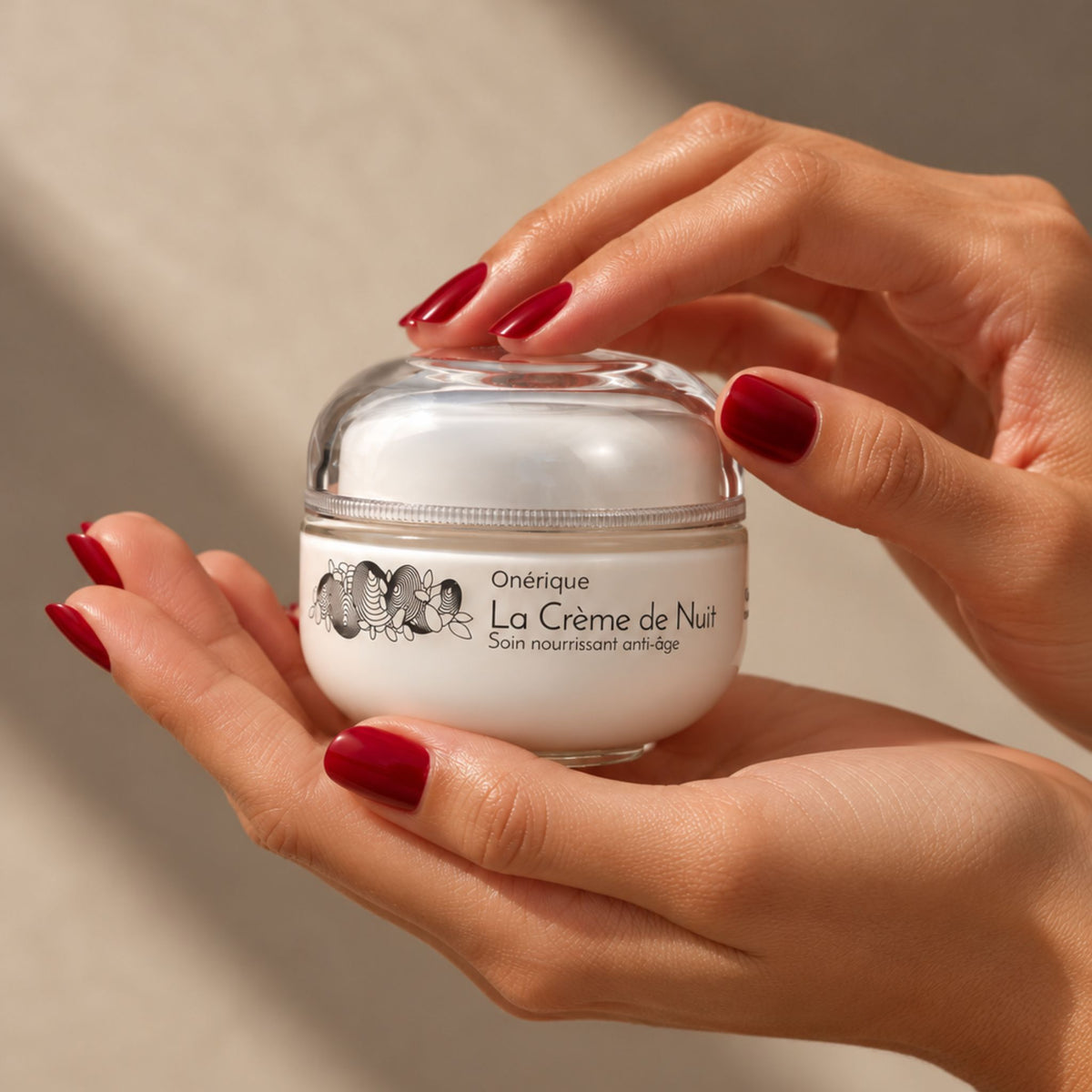
3. La Crème Coton to hydrate without weighing down. Its velvety texture absorbs in seconds without leaving a film or shine, making it an ideal base for makeup.

The result: hydrated, radiant, supple skin, perfectly prepared for the makeup artist's work.

What this experience changed for us
Fashion is often imagined as a superficial world. From afar, everything seems to be just appearances, imagery, and speed. Seen from the inside, it is something else entirely.
It is an industry that employs a huge number of people, demands extreme precision, and where every individual, from the embroiderer to the producer, practices a true craft. It is also a space of creation where stories are told: the Levantine craftsmanship of Tala Barbotin Khalidy, the memory of the Tang Dynasty in Ren Chunmei’s work, the idea of clothing as armor for Rubin Singer.
We went there to prepare skin. We left with something else.
Respect, first and foremost, for those who keep this industry alive, and a certainty: exceptional skincare should not be reserved for backstage.
Frequently Asked Questions
What products should be used to prepare the skin before makeup?
Good preparation is based on three steps: a gentle cleanser that doesn't strip the skin, a brightening or protective treatment, and a lightweight moisturizer that absorbs quickly. The goal is supple, even, grease-free skin so that makeup adheres correctly and stays on for the long haul.
Why does makeup settle or "crease" on certain skin types?
Generally, because the skin is dehydrated or the skin barrier is weakened. On dry skin, foundation settles into rough areas and accentuates fine lines. On skin that is too oily or overloaded with skincare, it slides and doesn't last. The balance comes from appropriate hydration, applied a few minutes before makeup.
Do you need professional products to achieve a runway result?
No. Backstage work relies on methodology and the quality of the formulas, not inaccessible products. The skincare used is the same as that of a well-constructed daily routine. What changes is the rigor of the technique and the order of application.
How long should you wait between skincare and makeup?
Ideally two to three minutes, allowing enough time for the cream to fully penetrate. Applying foundation to skin that is still damp from skincare prevents proper adherence and causes visible boundaries.
What exactly is Paris Fashion Week?
It is one of the four major global fashion events, along with New York, London, and Milan. It is held twice a year, for Spring-Summer and Autumn-Winter collections, in locations spread throughout the city. Each edition brings together hundreds of shows, presentations, and professionals from around the world.
Backstage skincare: Onérique
By invitation of The Backstage Team x Fabiana Graziani